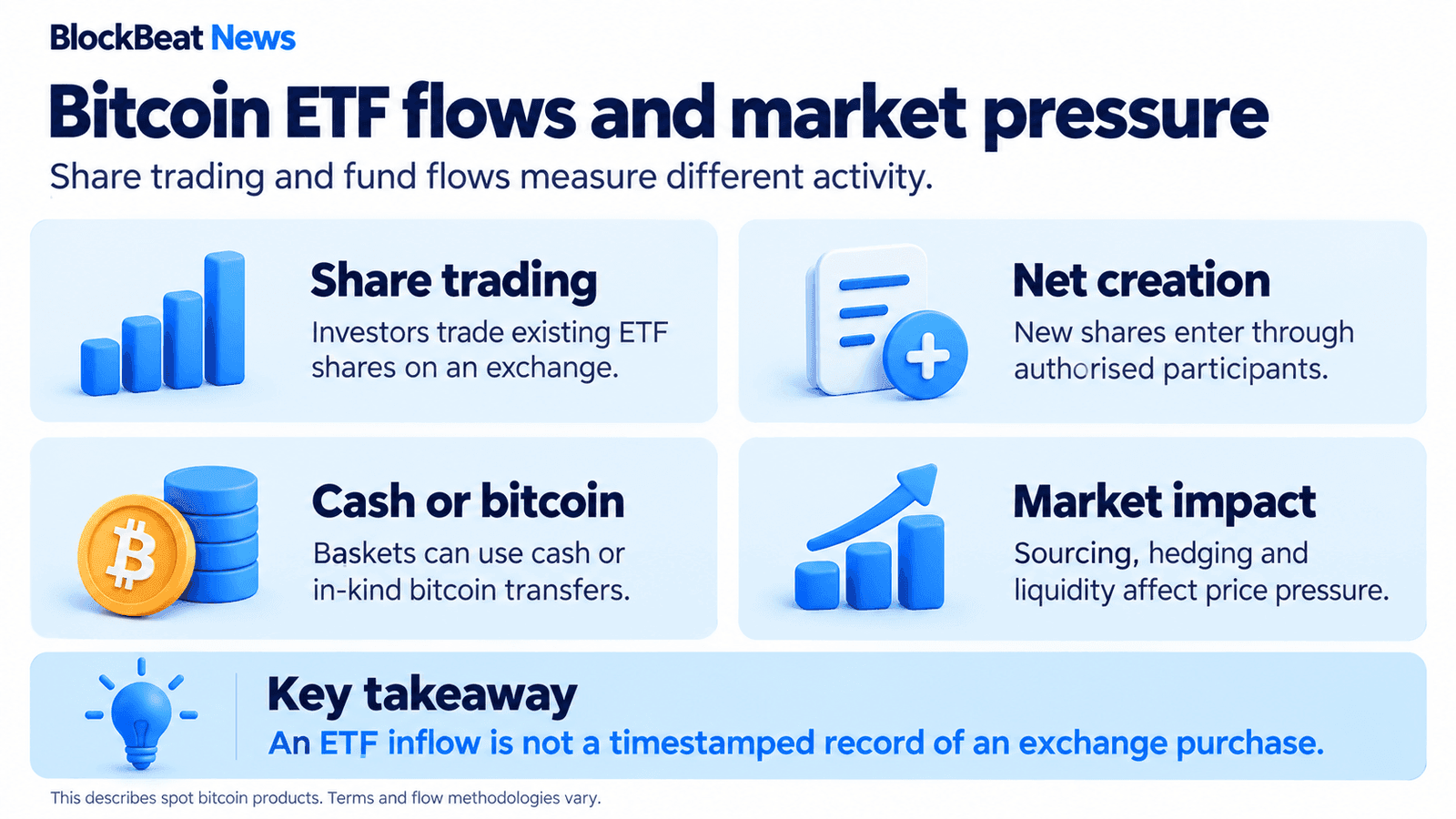
How Bitcoin ETF flows relate to buying and selling pressure
Trading existing shares differs from creating or redeeming them. Cash, in-kind transfers and intermediary hedging determine how fund activity reaches bitcoin markets.




Clear explanations of crypto, blockchain and AI, by Chris DW, Editor. Start with a topic below and follow the evidence and worked examples.
Trading existing shares differs from creating or redeeming them. Cash, in-kind transfers and intermediary hedging determine how fund activity reaches bitcoin markets.
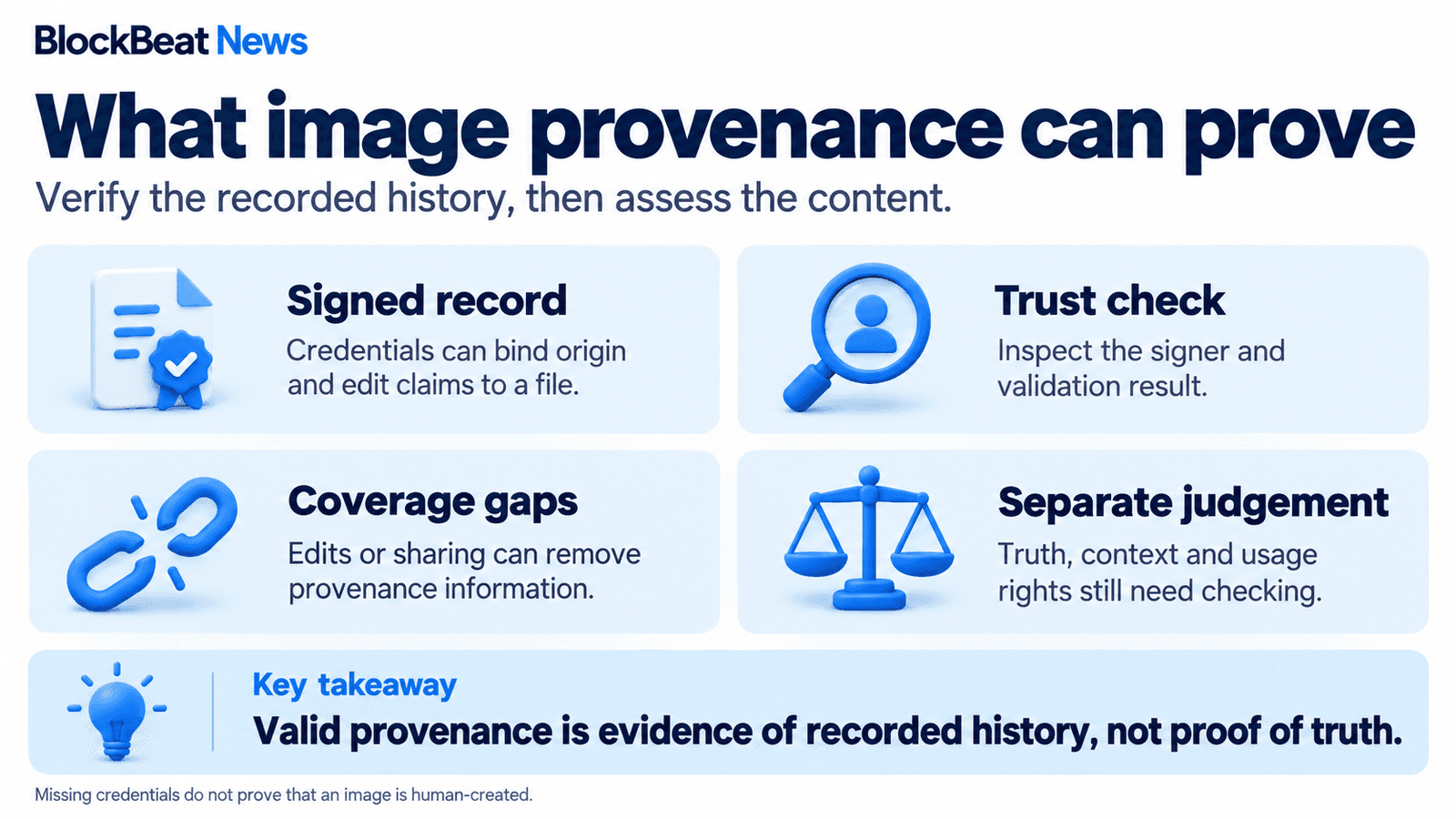
Signed credentials can support claims about an image's origin and editing history. They do not establish that the scene is true, the history complete or publication rights cleared.
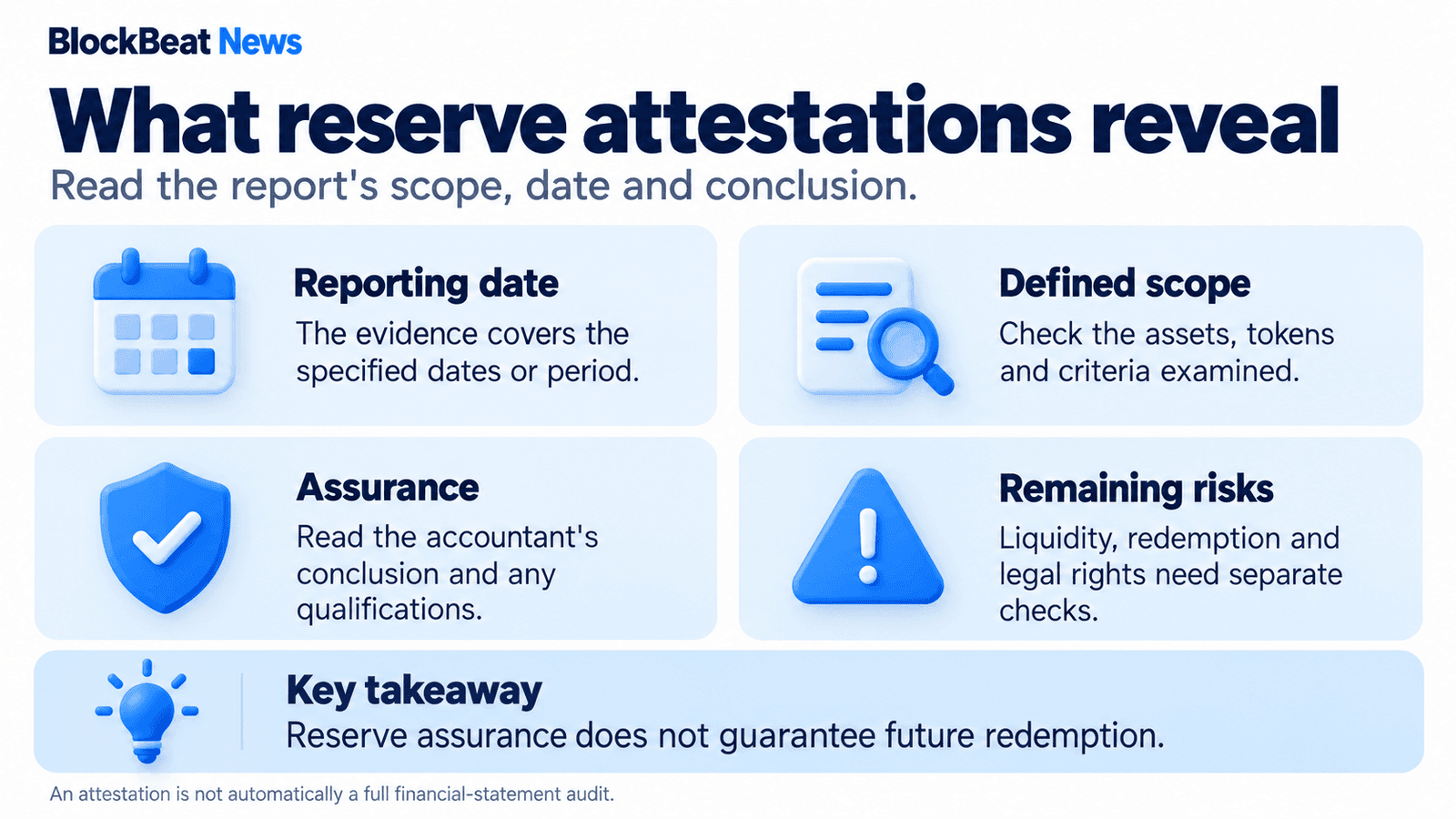
A reserve report provides evidence within a defined scope and reporting date. Its conclusion does not guarantee continuous backing, issuer solvency or your ability to redeem.
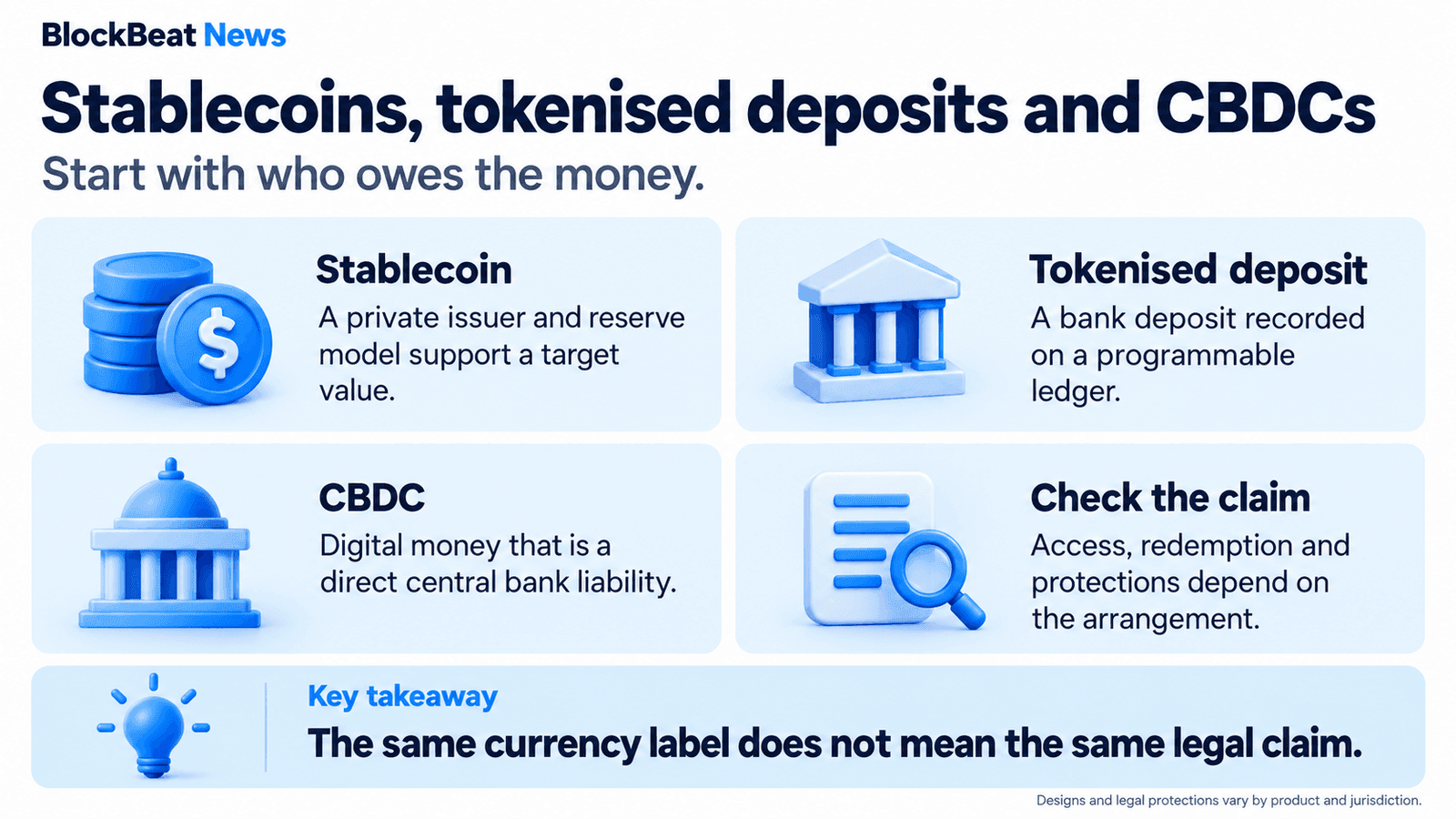
The issuer, legal claim and redemption route distinguish three forms of digital money. A shared currency label does not give them identical protections.
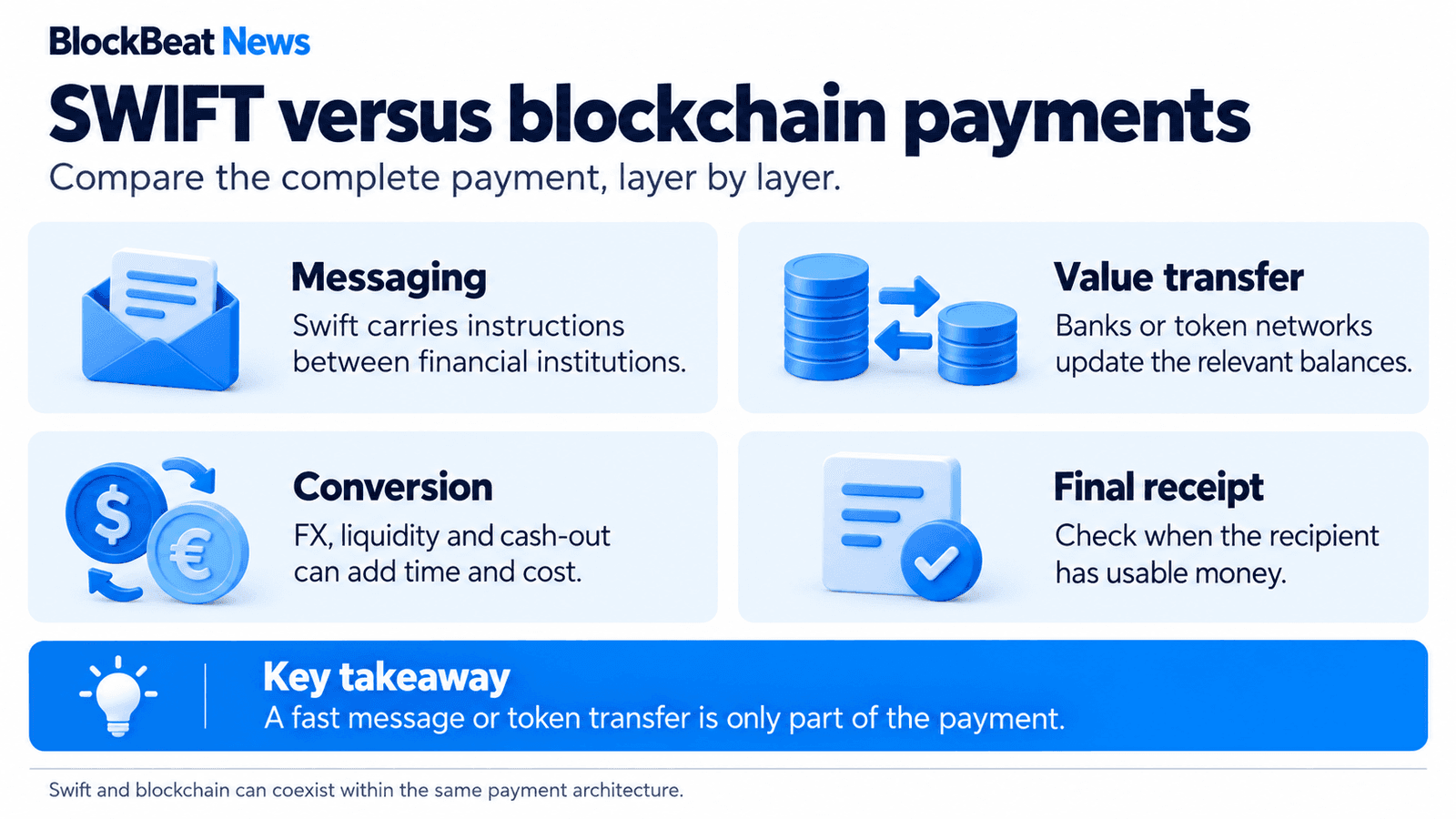
Messaging, settlement assets and the recipient's access to money are different layers. Compare a complete payment route before judging cost or speed.
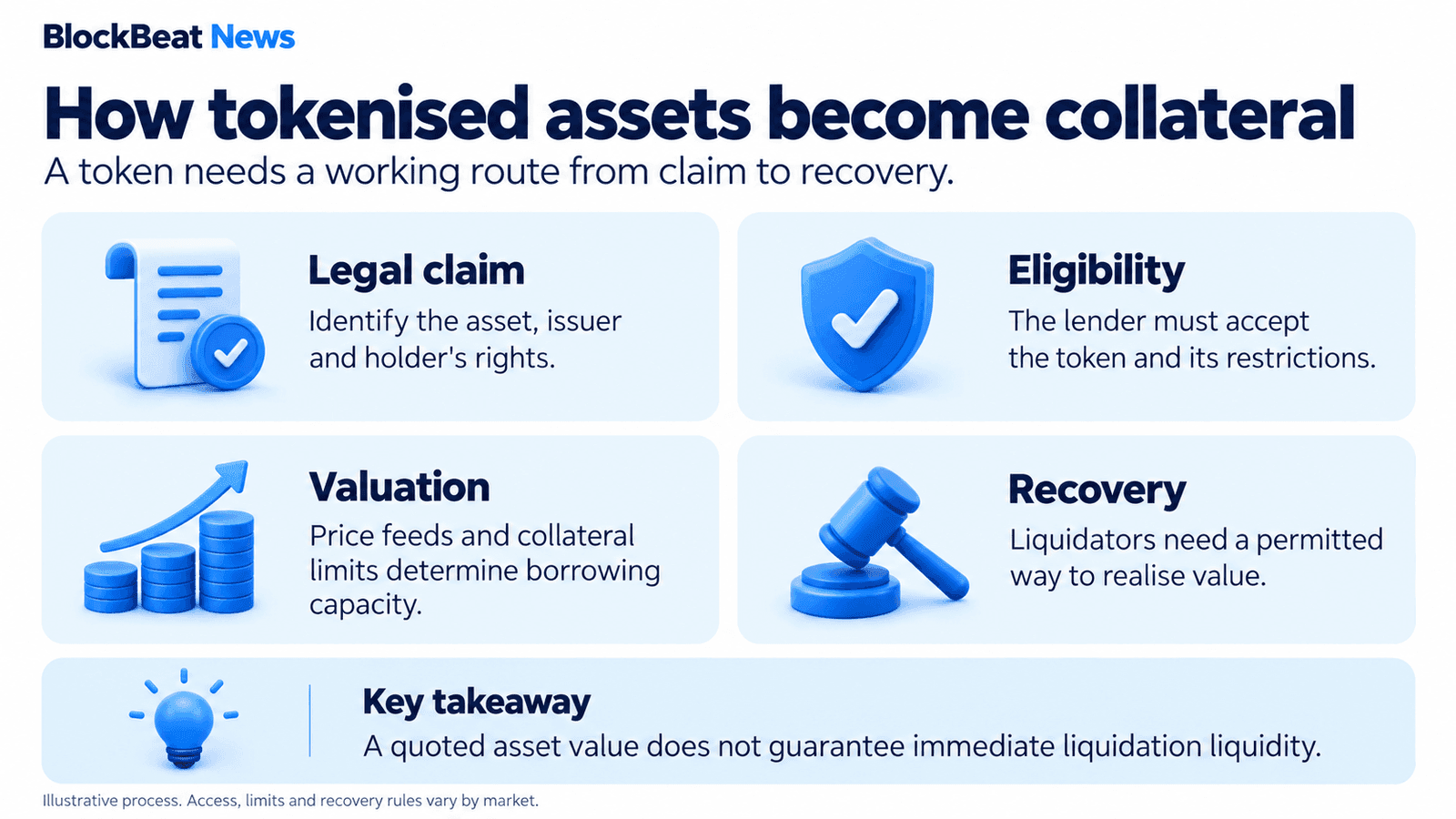
A lending protocol needs more than an asset token. Legal rights, transfer permissions, valuation and a workable recovery route determine whether it can support a loan.
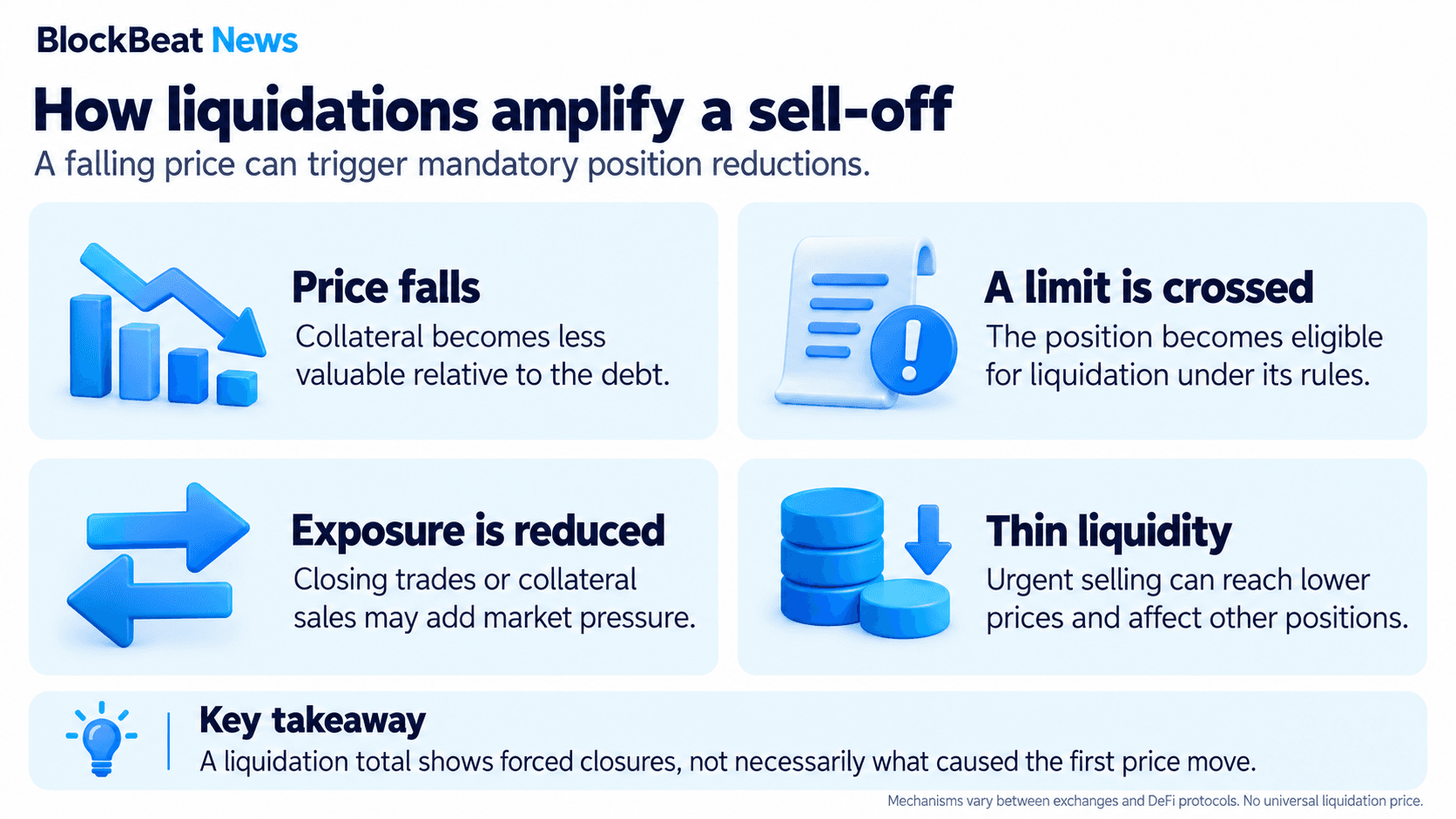
Borrowed positions can create selling that participants no longer choose. A worked example shows how collateral limits, liquidators and market depth connect.
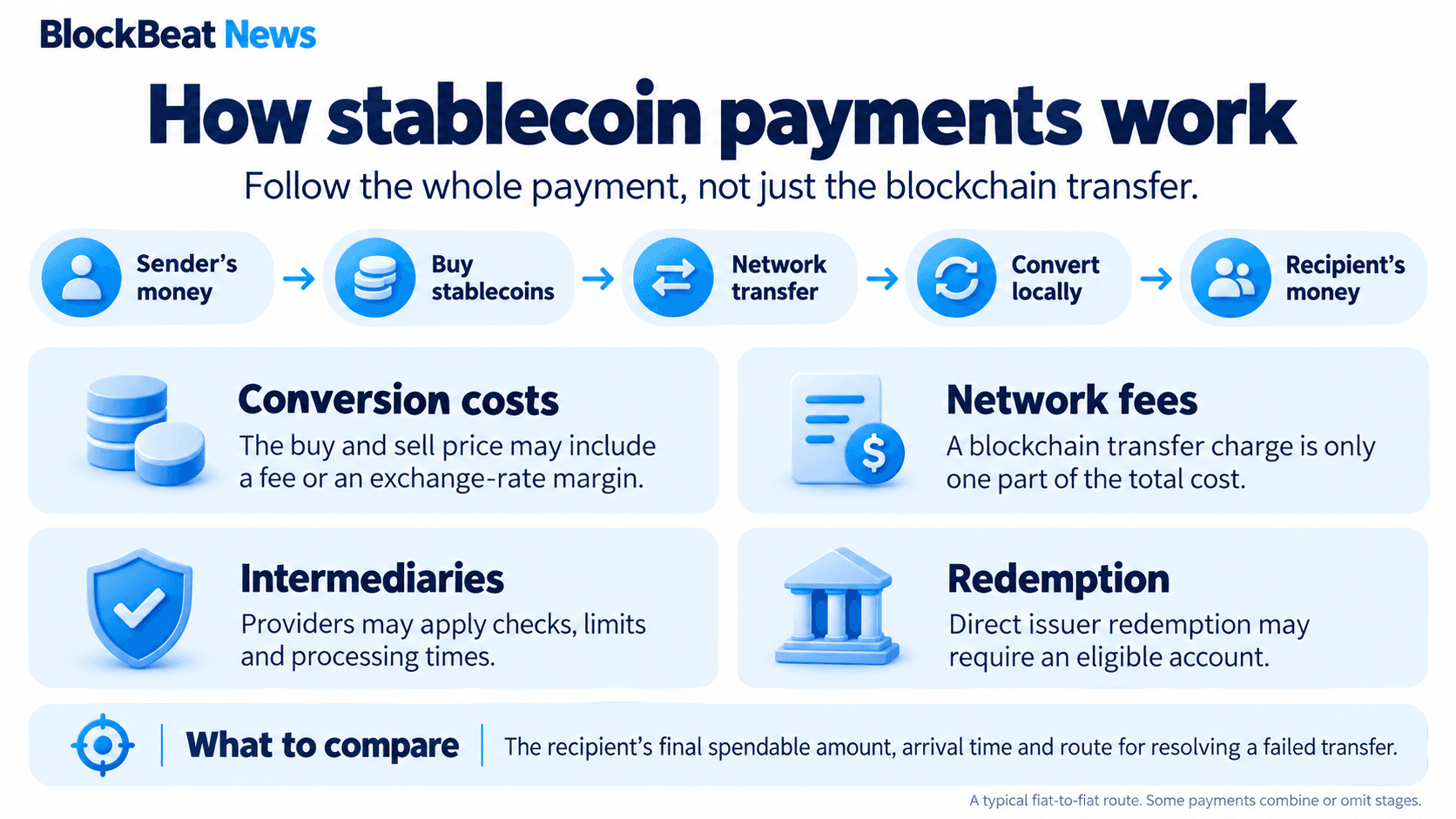
A blockchain transfer is one stage of a payment. Conversion, redemption and local banking determine what the recipient can actually spend and when.
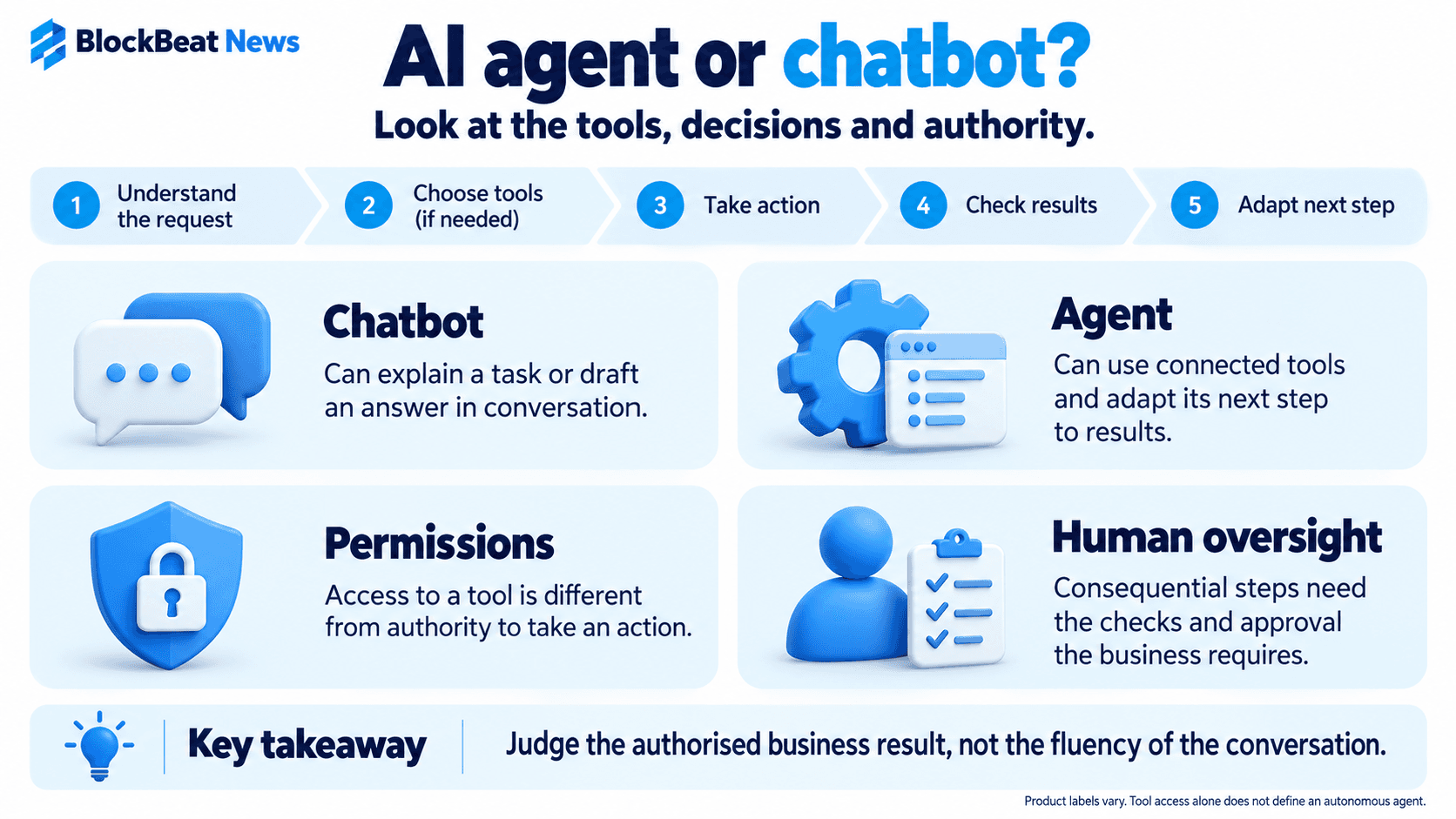
The distinction is what the system can do, how it chooses its next step and who authorises the result. A supplier-order example follows the tools, permissions and human checks.
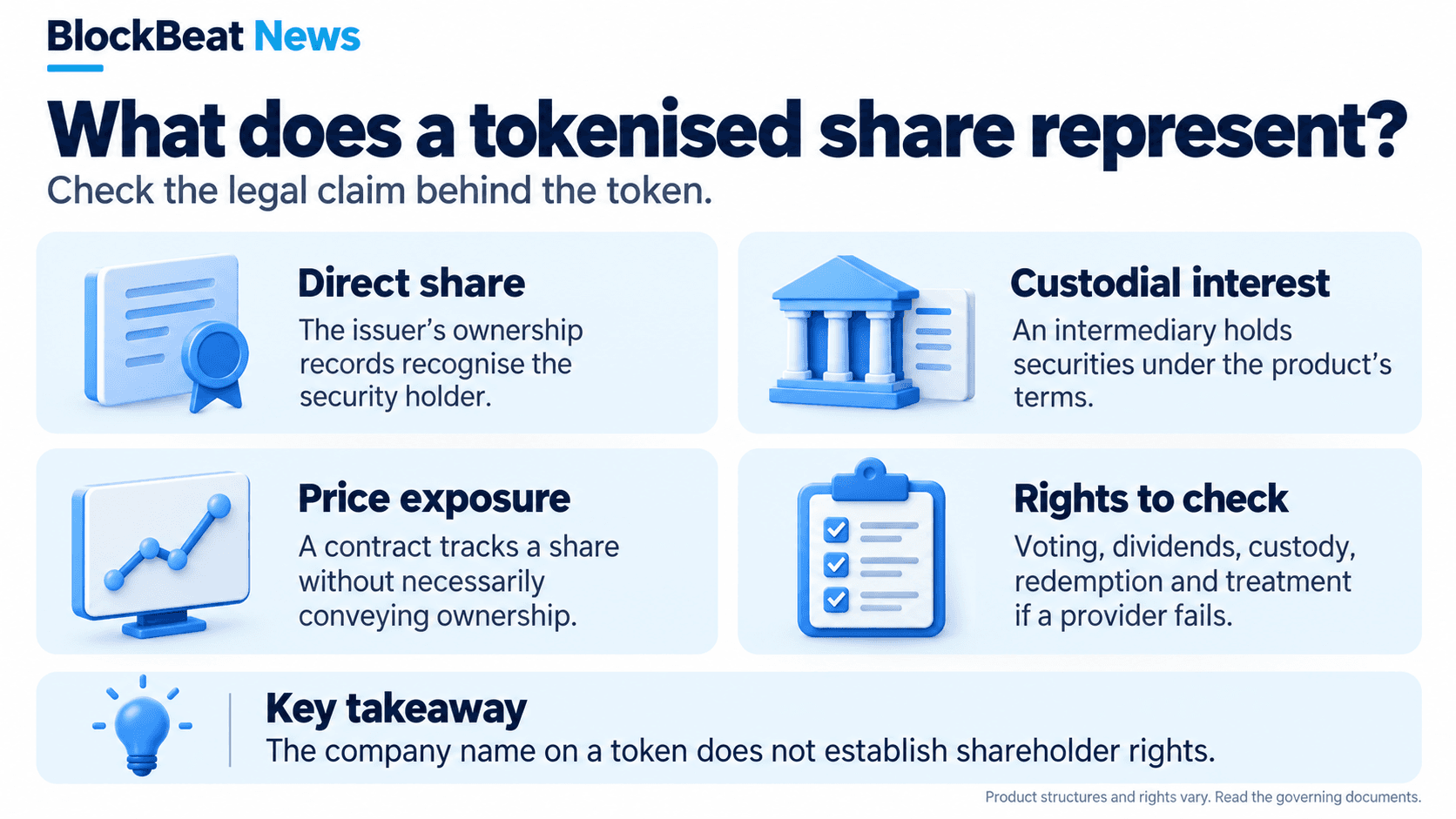
A token can represent a company share, a claim through an intermediary or a product tracking the price. The legal rights matter more than the ticker or blockchain.
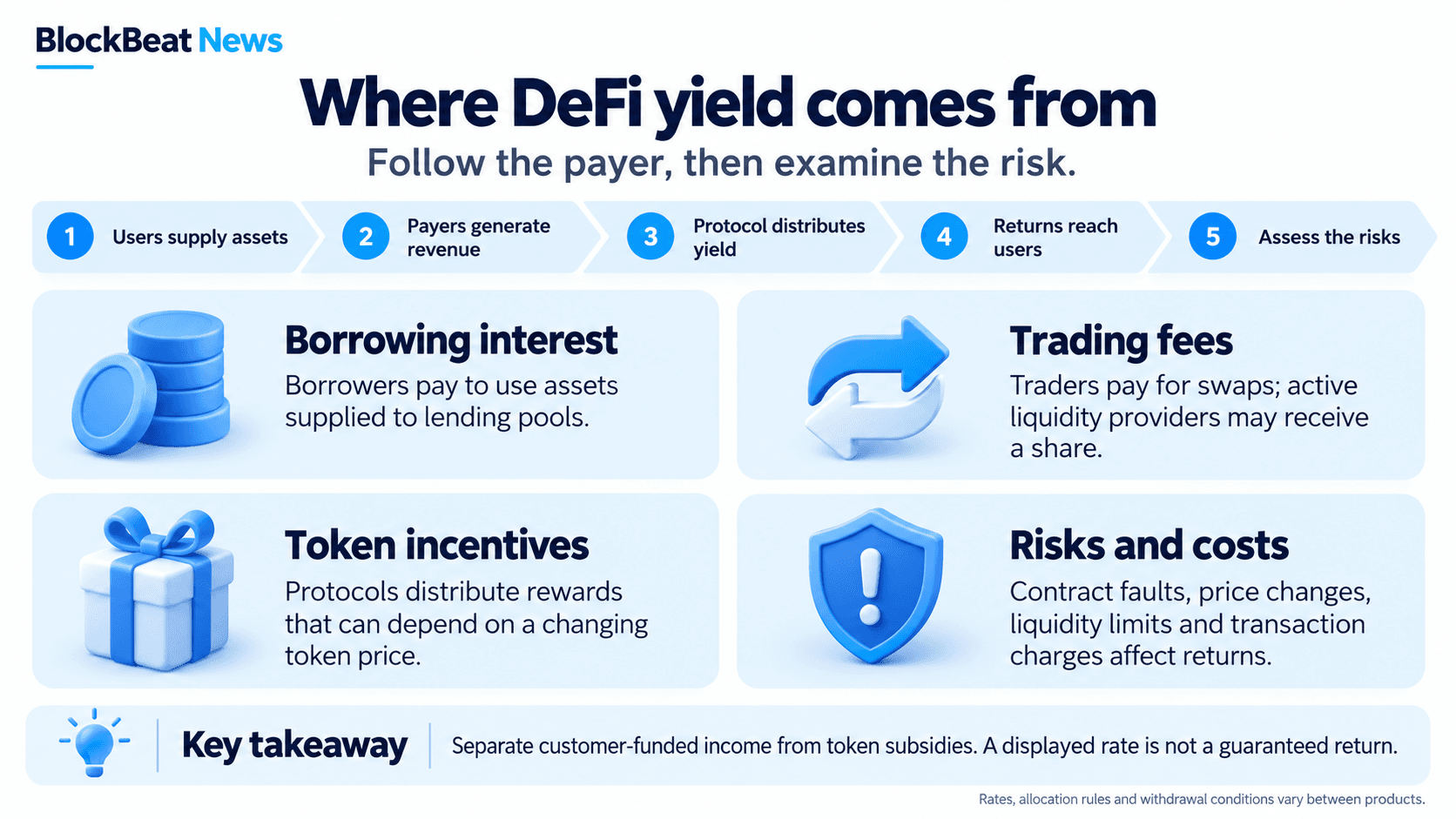
Borrowing interest, trading fees and token incentives pay for different things. Following the source of a return reveals the risks that a headline annual percentage can conceal.
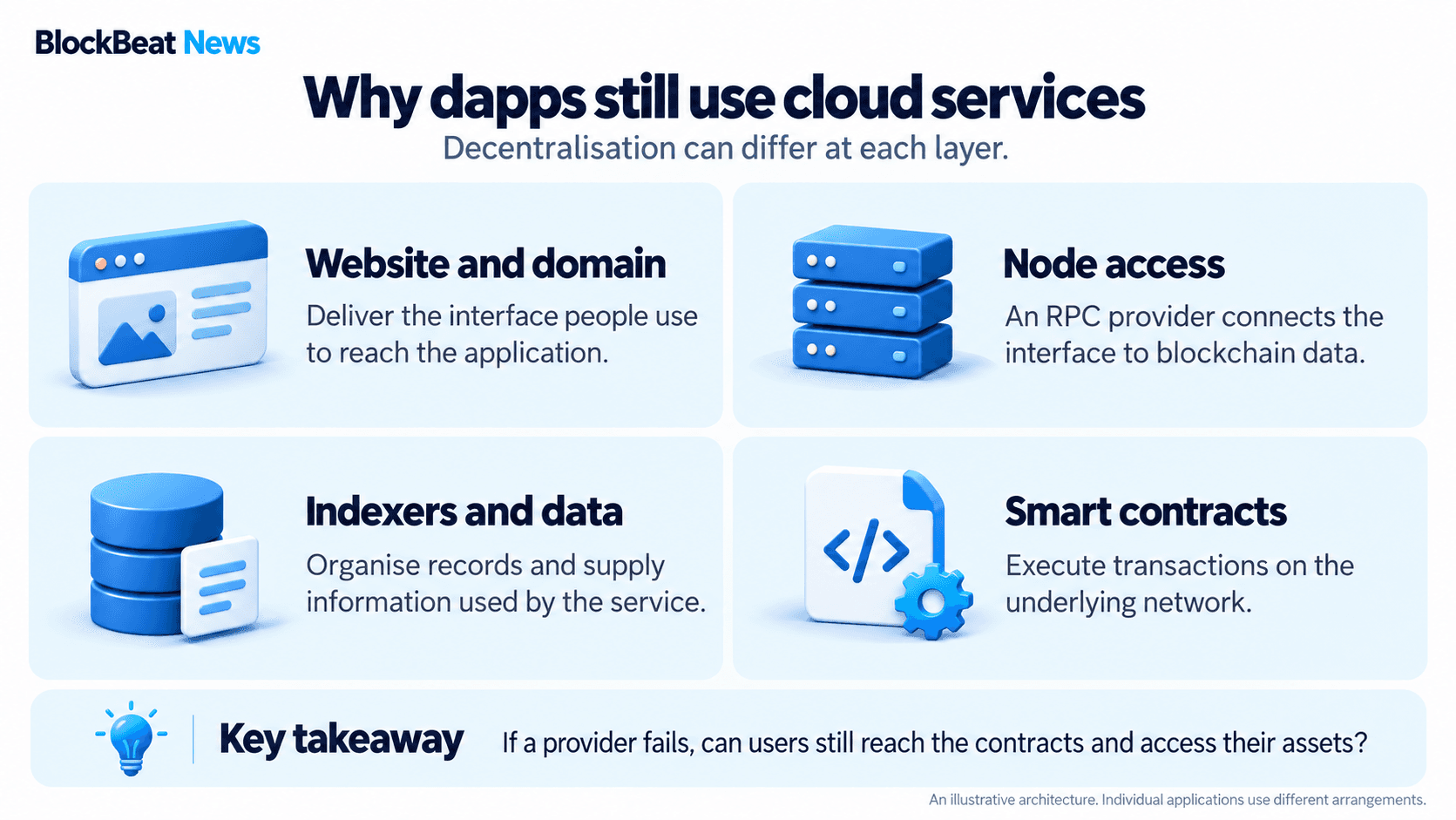
A smart contract can run across a distributed network while the website, data services and access points depend on a handful of providers. Resilience depends on the complete application.