



Original market intelligence, analysed, cross-referenced and published by Blockbeat News.
Bitcoin’s fall to $55,500 squeezes miners as hashrate returns above 1 ZH/s
Bitcoin’s two-year price low has coincided with renewed competition among miners and a projected 8.5% difficulty increase. MARA’s reported $3 billion of Bitcoin sales in 2026 shows how weakening mining economics can turn accumulated reserves into a recurring source of liquidity.
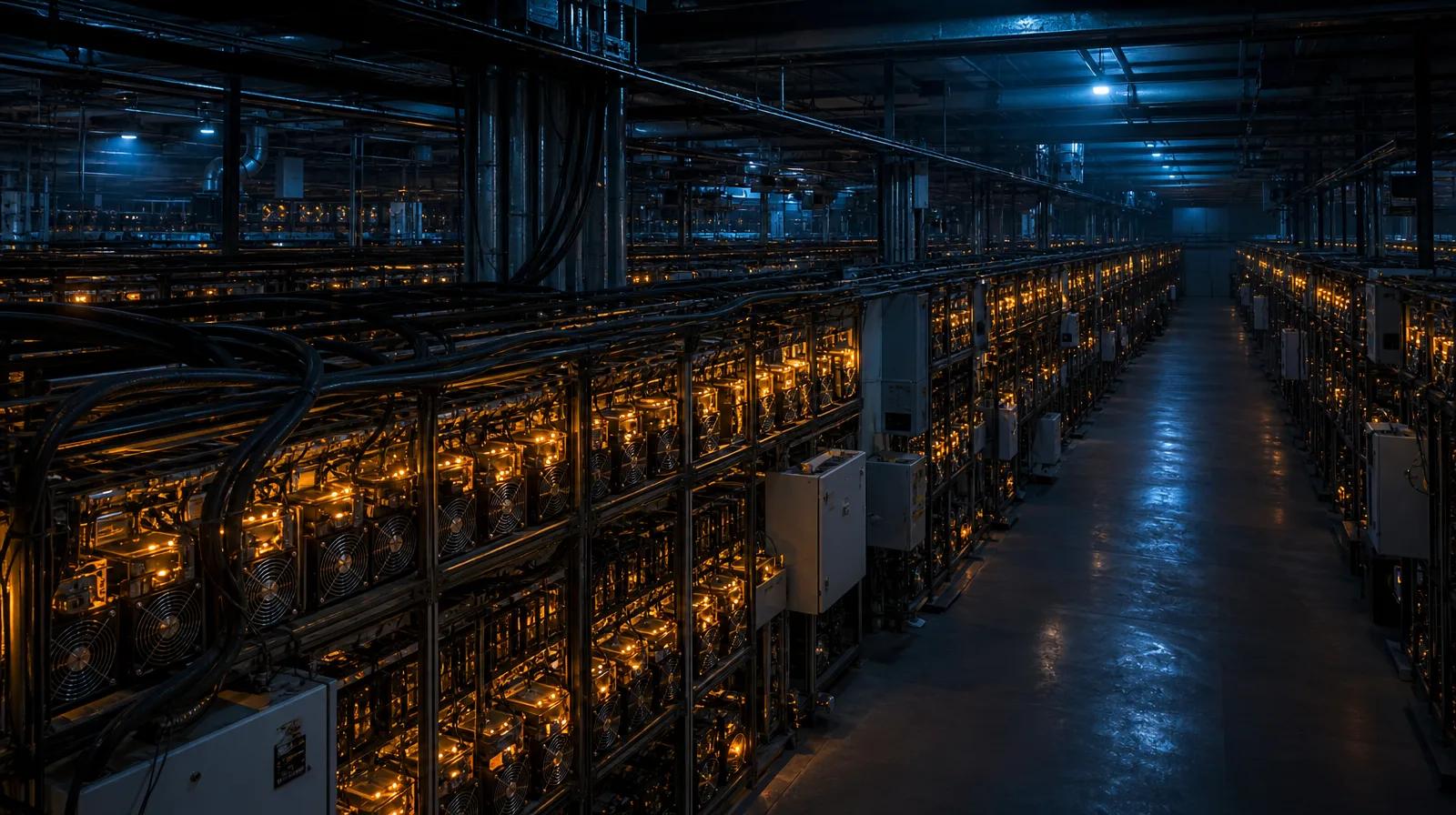
Bitcoin traded near $55,500 on 21 November, its lowest level in two years, while the network’s estimated hashrate returned above one zettahash per second. Mining profitability was already declining, and a projected 8.5% difficulty increase threatened to reduce the output available to less efficient machines.
The combination is more consequential for miners than either figure alone. Bitcoin’s price determines the fiat value of their block rewards, while the network hashrate measures how much computing power is competing for them. More competition has arrived as the value of the reward has fallen.
Each block currently carries a subsidy of 3.125 BTC plus transaction fees. At $65,000, the subsidy alone was worth about $203,125. At $55,500, it was worth approximately $173,438, a decline of nearly 15% before accounting for fees. The network is simultaneously directing a smaller dollar reward towards a larger pool of computing power.
One zettahash increases competition for the same subsidy
A miner’s expected Bitcoin output depends on its share of the network’s total hashrate. An operator running 10 exahashes per second earns a smaller proportion of blocks when the network exceeds one zettahash than when it operates at 900 exahashes, assuming its own capacity is unchanged.
Bitcoin’s protocol reinforces this effect through difficulty adjustments every 2,016 blocks. If additional computing power causes blocks to arrive faster than the ten-minute target, the next adjustment increases the work required to produce a valid block. The reported 8.5% projection can still change before the adjustment, but an increase of that size would reduce expected Bitcoin output per unit of computing power unless a miner added capacity at the same pace.
Electricity, hosting, staff and financing costs do not decline automatically with Bitcoin. Operators with efficient machines and favourable power contracts can continue running at prices that force older fleets offline. Others may accept temporarily weak margins because equipment has already been purchased, hosting agreements remain in force or shutting down would forgo any contribution towards fixed costs. Hashrate can therefore remain high after profitability has deteriorated.
A sustained squeeze eventually becomes visible through machine curtailments, lower network hashrate or corporate financing decisions. Difficulty then adjusts with a lag, redistributing a greater share of subsequent rewards towards the miners that remain online.
MARA has converted $3 billion of Bitcoin into cash in 2026
MARA provides the clearest disclosed example of how a miner can use its accumulated Bitcoin during this process. Reporting on 18 November put the company’s Bitcoin sales during 2026 at $3 billion and said further disposals were planned.
That total includes the previously disclosed sale of 13,597 BTC for approximately $1.1 billion at an average price of $81,039. MARA used $750 million of the proceeds to repay Bitcoin-backed debt and retained 34,012 BTC immediately after the transaction. Bitcoin’s subsequent move to $55,500 placed the market about 31.5% below MARA’s sale price, validating the immediate collateral-risk reduction even as it reduced the company’s exposure to any recovery.
The later year-to-date figure places that debt repayment inside a continuing disposal programme. MARA’s treasury is functioning as a source of liquidity alongside the Bitcoin generated by its mining fleet. This matters because miners occupy a different position from companies that hold Bitcoin without producing it: they receive new coins as operating output but incur most of their expenses in fiat currency. Falling mining revenue increases the incentive to sell current production, accumulated reserves or both.
MARA is a disclosed example rather than evidence that every listed miner is following the same policy. The mechanism nevertheless has a direct market consequence. A miner can add more Bitcoin to circulation than its current production when it draws down reserves, turning holdings accumulated during stronger conditions into supply during a falling market.
The next difficulty adjustment will locate the pressure
Bitcoin’s return above one zettahash per second indicates that substantial computing capacity remains active despite the price decline. It does not reveal how evenly the resulting strain is distributed. Large operators may retain access to cheaper electricity, newer machines and external capital, while smaller or highly leveraged miners absorb a disproportionate loss of margin.
If the projected difficulty increase is realised and hashrate remains above one zettahash, the pressure will remain concentrated in miner economics rather than appearing immediately as a network contraction. A material fall in hashrate after the adjustment would instead indicate that marginal machines have begun shutting down, eventually providing difficulty relief to surviving operators.
The most useful evidence will come from the realised difficulty change, subsequent hashrate and listed miners’ November production and treasury disclosures. Continued reserve sales alongside a $55,500 Bitcoin price would show that the latest decline is affecting the supply decisions of producers, not only the mark-to-market value of investors’ holdings.
Related reading
Intelligence ·
Stablecoin supply drops $6.7 billion as Bitcoin falls below $75,000
The steepest weekly stablecoin contraction reported in 2026 coincided with Bitcoin falling below $75,000 and a roughly $200 billion decline in altcoin market value. A short-liquidation rally and Bitcoin sales by miners show why Binance’s recapitalisation has not yet translated into a broad market recovery.
Commentary ·
How leverage and liquidity drove the Bitcoin sell-off
The recent Bitcoin sell-off was driven by leverage, liquidity mechanics, and forced positioning rather than a shift in long-term conviction.
Intelligence ·
MARA sells 13,597 Bitcoin, turning a treasury reserve into debt repayment
MARA sold 28.6% of its pre-sale Bitcoin balance for $1.1 billion and repaid $750 million of Bitcoin-backed debt before the asset fell below $63,000. The disposal shows that public-company holdings can supply the market as well as absorb coins, even while Strategy and other institutions continue buying or expanding access.
Intelligence ·
Bitcoin falls below $81,000 as ETF flows reverse
A sharp reversal in exchange-traded fund flows accompanied Bitcoin’s retreat from above $87,000 to below $81,000, while leveraged positions intensified the decline. The latest week shows that regulated access is making crypto more institutionally connected, but not necessarily more stable.