



Original market intelligence, analysed, cross-referenced and published by Blockbeat News.
Ledger’s seven-market withdrawal exposes self-custody’s reseller risk
Ledger withdrew wallets from seven Asian markets amid reports that devices sold through reseller CryptoBilis had been tampered with, with estimated losses ranging from $86 million to $93 million. Separate attacks affecting NGRAVE and Electrum users show how wallet security can fail through procurement, authentication and transaction presentation even when the underlying cryptography remains intact.
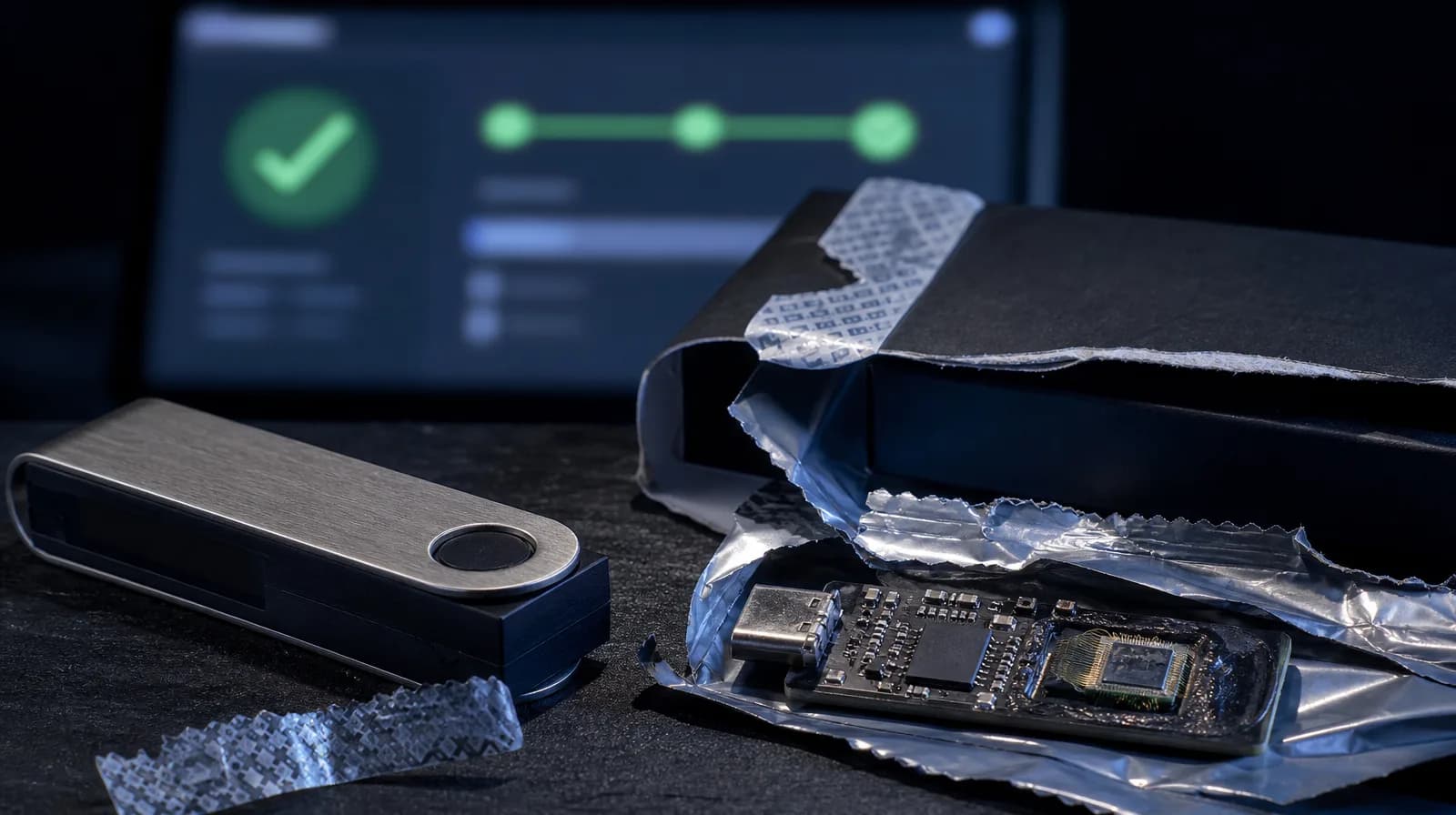
Ledger withdrew hardware wallets from seven Asian markets and warned buyers of devices supplied by reseller CryptoBilis to stop using them amid an investigation into alleged tampering. Reports linked modified devices containing implanted components to losses estimated at between $86 million and $93 million.
The loss range has not been reconciled, and the public reporting describes an investigation rather than a final technical account. The scale and geographic response are nevertheless material: a product designed to isolate private keys may have been compromised before reaching its owner. That turns the retail supply chain into part of the security model.
Two subsequent incidents reinforced the point through different attack methods. NGRAVE users reported losing $2.65 million in a phishing campaign, while an attack affecting Electrum reportedly concealed diverted Bitcoin by presenting the loss as an increase in transaction fees. There is no evidence that the incidents shared attackers or technical vulnerabilities. Their common feature was exploitation of the point at which a holder acquires, authenticates or interprets a wallet.
Hardware provenance becomes an asset risk
Hardware wallets are intended to keep private keys away from an internet-connected computer and require transactions to be confirmed on a separate device. That protection depends on the device being genuine, its components and firmware remaining unmodified, and the screen displaying the transaction that will actually be signed.
A compromised reseller can undermine those assumptions before the user creates a wallet. Tamper-evident packaging provides limited protection if attackers can reproduce it or modify devices earlier in the distribution process. Most buyers cannot inspect chips, audit firmware or establish whether a device matches the manufacturer’s original specification.
The Ledger episode therefore places commercial controls alongside cryptographic ones. Direct-sales records, authorised reseller oversight, device attestation, identifiable production batches and the ability to conduct a targeted recall all affect whether compromised units can be isolated. A withdrawal covering seven markets suggests that the suspected exposure could not initially be contained to individual customers or serial numbers.
The reported loss of almost $5 million by one holder through a related spy-chip exploit illustrates the consequence. The victim’s identity or intentions did not alter the mechanism: possession of the device created confidence that transactions were being authorised securely. If the signing environment itself had been modified, conventional precautions taken after delivery would have offered limited protection.
Phishing and fee displays bypass key protection
The NGRAVE incident involved phishing rather than alleged hardware modification. Phishing targets the user’s authority to restore a wallet, disclose credentials or approve an action. Strong encryption cannot protect assets once a valid recovery phrase or signature has been obtained through deception.
Electrum’s reported attack adds a different presentation risk. By making diverted Bitcoin appear to be a higher transaction fee, the attacker could exploit a familiar and sometimes volatile cost category. A user might attribute the unexpected balance reduction to network conditions instead of recognising an unauthorised transfer quickly enough to respond.
This distinction matters for wallet design. Address verification, fee calculation and transaction output details are security controls when they determine whether the user understands what is being signed. A wallet that protects a key while presenting misleading transaction information can still produce a valid but unintended transfer.
Reported tracing of $3.89 million from a Ledger wallet theft to Binance deposits shows that public transaction records may assist an investigation after funds move. Tracing does not itself restore control of the assets, and recovery remains dependent on exchange intervention, legal authority and whether the funds have already been transferred or converted.
Custody services inherit a different set of failures
The incidents arrived as banks and financial platforms widened managed access to Bitcoin and Ether. Germany’s Sparkassen network began offering crypto trading within its banking application, while Deutsche Bank moved towards launching institutional custody. These services remove device procurement and recovery-phrase handling from the customer, although they concentrate security, safeguarding and access risk with the provider.
Self-custody and managed custody consequently expose holders to different failure modes. The former depends on authentic hardware, trustworthy software and accurate user authorisation. The latter depends on the custodian’s controls, solvency, segregation of assets and ability to process withdrawals. SideSwap’s resumption of Bitcoin swaps while associated Liquid reserves remained inaccessible during the period provided a separate reminder that transaction availability does not guarantee redemption availability.
Wallet manufacturers now have to demonstrate control over distribution as well as device design. The observable test for Ledger will be whether its investigation identifies the method of modification, the affected production or reseller batches, verified losses and a reliable way for customers to establish that their hardware is uncompromised. Until those details emerge, withdrawing products from seven markets contains availability but does not resolve the provenance problem.
Related reading
Commentary ·
Crypto's self-custody model has a physical security problem
Hardware wallet customer data breaches and physical attacks expose a costly weakness in self-custody, shifting competition towards privacy, protection and custody services.
Commentary ·
Quantum risk puts blockchain cryptographic upgrades on the agenda
The rise of harvest-now, decrypt-later strategies is forcing blockchains, wallets, and institutions to treat cryptographic agility as a long-term security requirement.
Intelligence ·
Polygon licences and Samsung Wallet plans widen stablecoin distribution
Stablecoins and tokenised assets are moving beyond blockchain-native venues into licensed payment networks, mobile wallets and institutional products. The emerging competitive advantage is distribution and regulatory access, although security and asset integrity remain material constraints.
Commentary ·
Binance and Polymarket put their resources behind customer protection
Reimbursement promises reveal why crypto platforms absorb security losses, and where commercial incentives reach their limits as customer protection.