



War Is Now Fought Across Energy, Code and Payments
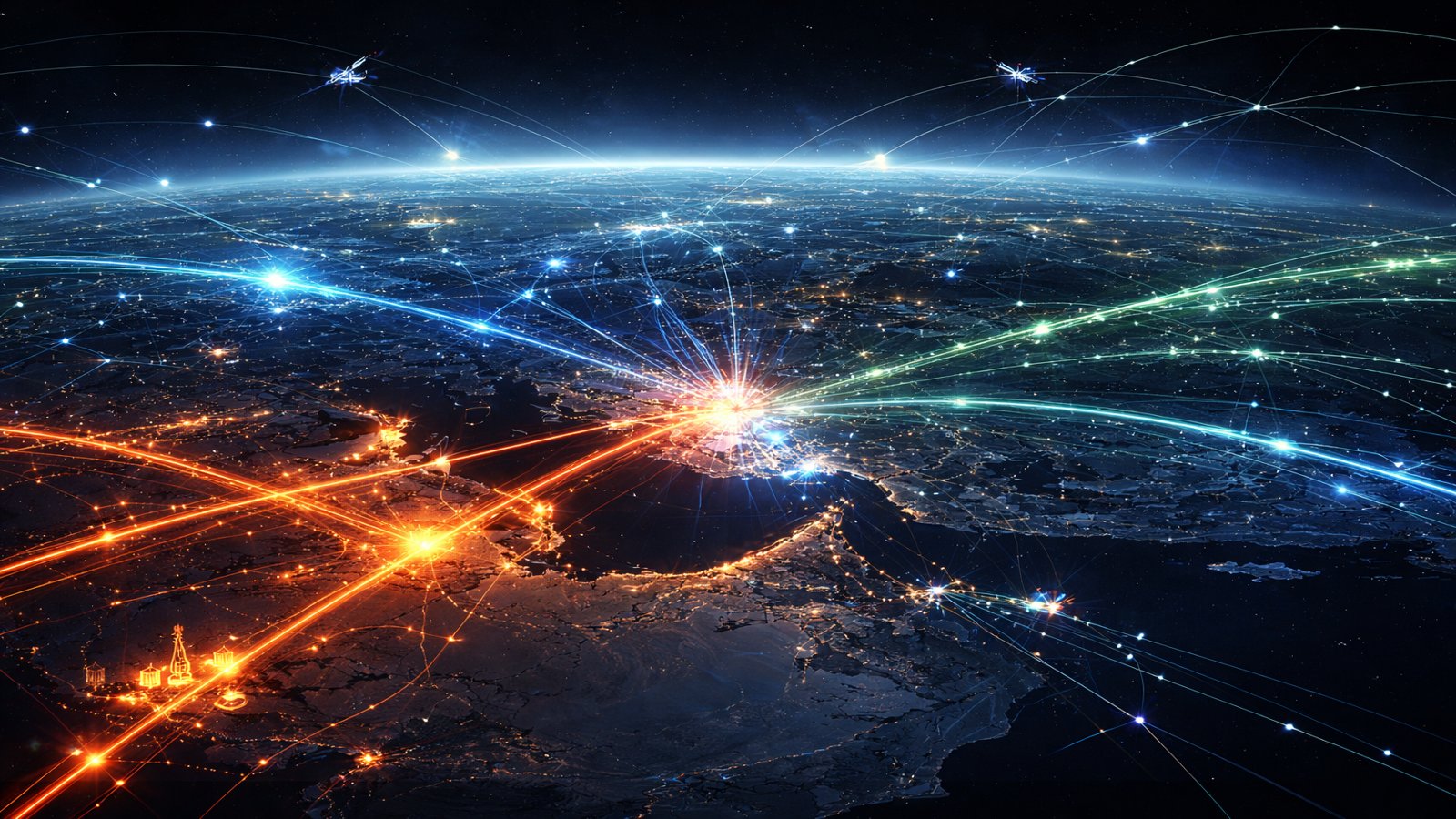
Modern conflict increasingly targets the infrastructure layers that sustain global economic activity: energy supply chains, financial settlement networks, digital communications and the compute systems that power the modern data economy.
The Iran conflict highlights a structural shift in how geopolitical competition unfolds.
Wars were once measured primarily in territory, troop movements, and military hardware. Markets reacted to battlefield developments and diplomatic signals. That framework now explains less of the economic reaction.
Modern conflict increasingly targets the infrastructure that keeps global commerce functioning. Energy flows, payment networks, and digital systems now sit on the front line of geopolitical competition. When these systems are disrupted, the effects propagate through pricing, trade, and corporate strategy far faster than traditional military escalation.
Energy chokepoints now move markets faster than diplomacy
Energy infrastructure sits at the centre of modern economic vulnerability.
The Strait of Hormuz remains one of the most critical maritime chokepoints in the global system. A large share of the world's oil exports passes through this narrow corridor connecting the Persian Gulf to global markets. Any threat to tanker routes introduces immediate pricing risk.
Energy markets react rapidly because industrial supply chains depend on stable fuel inputs. Manufacturing, transport, agriculture, and electricity generation all reflect energy pricing. When traders perceive disruption risk, futures markets adjust quickly.
The economic effect is not limited to oil prices. Higher energy costs transmit through shipping rates, manufacturing inputs, and consumer prices. Inflation expectations shift. Central banks reassess policy paths. Corporations reconsider procurement strategies and inventory planning.
Financial rails become instruments of geopolitical pressure
Energy is not the only infrastructure layer exposed to conflict.
Financial settlement systems increasingly function as tools of geopolitical leverage. Sanctions regimes, banking restrictions, and payment exclusions isolate economies from global liquidity flows.
When governments restrict access to financial networks they constrain the ability of firms to settle trade, access capital, and conduct cross‑border transactions. Corporations operating in affected regions face settlement delays, liquidity uncertainty, and compliance risk.
Financial infrastructure therefore becomes a strategic instrument.
Governments can impose economic pressure without deploying military force.
Cyber operations target economic infrastructure
Digital systems represent the third infrastructure layer increasingly exposed to geopolitical conflict.
Cyber operations now frequently target banks, telecommunications networks, logistics systems, and government infrastructure. The objective is disruption rather than physical destruction.
A coordinated cyber campaign can interrupt payment systems, disable trading platforms, or degrade communications networks that businesses depend upon for daily operations.
The economic consequences can be immediate. Financial exchanges depend on continuous uptime. Telecommunications networks support logistics, trading, and digital payments. When these systems fail, even temporarily, operational paralysis spreads rapidly across sectors.
Markets now respond to infrastructure risk rather than military headlines
Investors increasingly monitor infrastructure signals rather than battlefield updates.
Energy tanker movements, satellite images of shipping lanes, internet outage data, and payment network restrictions provide early indications of systemic stress. These indicators often move faster than official diplomatic statements.
Financial markets adapt accordingly. Commodity prices, shipping indices, and currency markets now react directly to signals from physical and digital infrastructure.
The focus shifts from military events to infrastructure resilience.
What this means for companies and investors
The strategic lesson is practical.
Organisations must treat infrastructure exposure as a core risk variable rather than an external geopolitical issue.
- Energy supply routes influence production costs and inflation expectations.
- Payment networks determine whether trade can settle.
- Digital networks determine whether operations can continue.
Corporate risk management therefore increasingly depends on monitoring infrastructure layers rather than political headlines.
Supply chains must account for energy chokepoints. Treasury teams must consider payment network dependencies. Technology leadership must treat cyber resilience as business continuity infrastructure.
Compute infrastructure becomes a strategic layer
Artificial intelligence infrastructure introduces an additional layer of geopolitical exposure.
Large-scale AI systems depend on energy-intensive data centres, global cloud networks and semiconductor supply chains. Training advanced models requires vast amounts of electricity and specialised compute hardware, both of which are tightly linked to energy markets and industrial logistics.
Energy volatility therefore propagates directly into the economics of AI. If oil and gas prices rise, electricity costs for data centres increase. If submarine cables or regional connectivity degrade, cloud infrastructure becomes less reliable. If semiconductor supply chains tighten, the cost of GPU capacity rises.
These dynamics mean that modern conflict increasingly affects not only trade and finance, but also the cost and availability of compute.
As artificial intelligence becomes embedded in finance, logistics, and industrial systems, the stability of compute infrastructure becomes part of the global economic security framework.
The infrastructure era of conflict
Modern geopolitical competition is increasingly about controlling infrastructure layers rather than territory.
Energy corridors determine industrial stability. Financial rails determine access to global liquidity. Digital networks determine whether commerce can function.
For businesses and investors the critical question is no longer simply whether tensions escalate. The more relevant question is which infrastructure layers break first.
The systems that fail earliest determine how quickly conflict transmits into the global economy.